Lessons Learned
Lessons from a Disaster
The 1996 flood left much more than a devastated landscape in the Saguenay–Lac-Saint-Jean region, and particularly in Saguenay: it provided important lessons for the future. Among these, the need for better risk management, including a more rigorous analysis of dams and vulnerable infrastructure. The disaster also showed the importance of effective communication between authorities, experts, and the population to ensure coherent and rapid responses. One of the conclusions to be drawn from this crisis is to plan well and be prepared if something bad happens. Moreover, this disaster served as a model for the whole province. For example, the requirement for Quebec cities to develop emergency response plans stems from this event.

The Red Cross has partnered with the Gouvernement du Québec to create the educational program "Expect the Unexpected” to help children better understand natural disasters and learn how to prepare mentally and physically in case of an emergency. It is now used in schools around the world.
Understanding to Better Prevent
In September 1996, Gouvernement du Québec established a scientific and technical commission of inquiry (the Nicolet Commission) to shed light on the Saguenay flood. Chaired by engineer Roger Nicolet, this commission was to analyze the causes of the flood, assess the crisis management and propose solutions to prevent similar events from happening again.
The Nicolet Commission became a landmark moment in raising awareness in Quebec regarding:
- the region's vulnerability to extreme hydrological events,
- the need to review safety standards for hydraulic structures,
- the importance of urban planning in flood-prone areas.

Scientific and Technical Commission on Dam Management: Report
Gouvernement du Québec, Commission scientifique et technique sur la gestion des barrages
A Clear Legal Framework
The Nicolet Commission concluded that a clear legal framework is essential for preventing disasters and better managing emergency situations. Such a framework clearly defines the responsibilities of authorities, ensures coordination between actors and requires effective preventive measures. It also helps prevent ambiguities during interventions and ensures that the necessary resources will be mobilized.
In 1996, the authorities did not have explicit legal authority to force an evacuation. Ordering it preventively might have limited the loss of life and situations of distress.
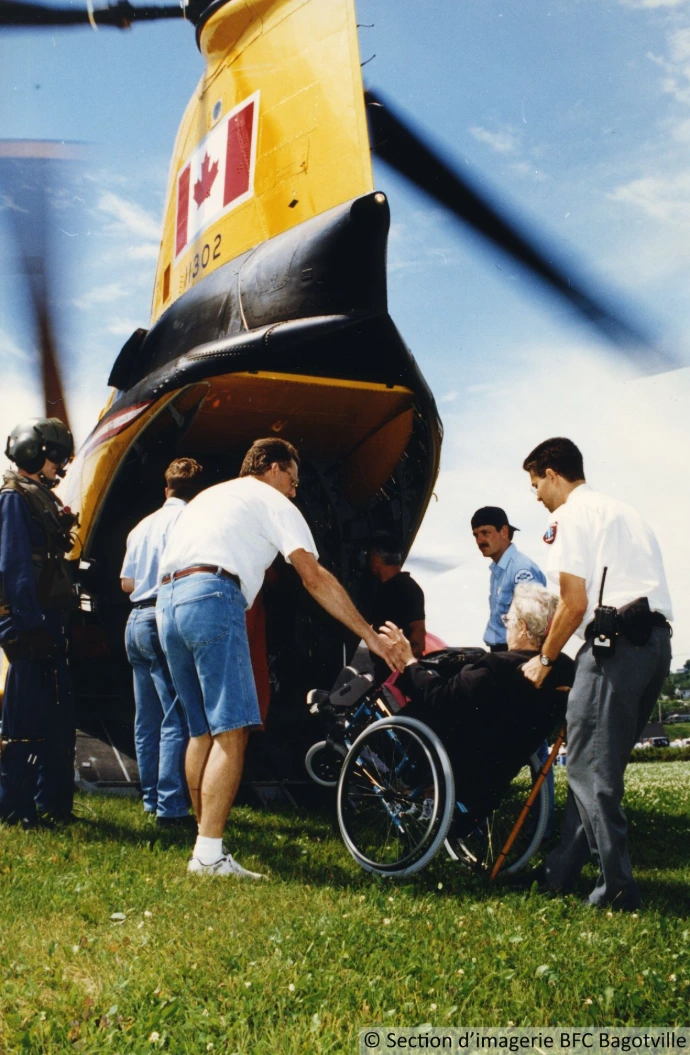
In force since 2001, the Loi sur la sécurité civile au Québec (Quebec’s Civil Protection Act) (L.Q. 2001, c. 76) grants authorities the power to order an evacuation in the event of imminent danger. This framework was modernized by the Loi de la sécurité civile (Emergency Preparedness and Disaster Resilience Act) to promote disaster resilience, which came into force on May 28, 2024, strengthening this response capacity.