The Saguenay Flood
History and Memory
of a Natural Disaster
A virtual
exhibition commemorating the floods of 1996, providing a retrospective on one
of the most significant natural disasters in Quebec’s history.
The 1996 Flood in Numbers
•July 19-20-21, 1996.
•Approximately 300 millimetres of rain during 50 consecutive hours.
•More than 6 million cubic metres of sediment shifted during the floods.
•A total cost of approximately $1.5 billion in property damage.
•10 deaths: 2 children died in Saguenay, buried in a house hit by a landslide; 5 car drivers died on the Côte-Nord, swept away or trapped on the roads; 3 victims in the tragic sinking of a sailboat.
•7,000 families have seen their homes and neighbourhoods slipping under their feet.
•3,000 homes were destroyed or heavily damaged.
•Close to 16,000 people were evacuated, including 5,000 by helicopter.
•Thousands of volunteers, including 1,700 people mobilized by the Red Cross, helped support the affected populations.
•18,880 people, or 9,609 families, received Red Cross assistance in 17 municipalities.
•25,000 beds, blankets, and personal care kits.
•An operation that extended over 13 years.
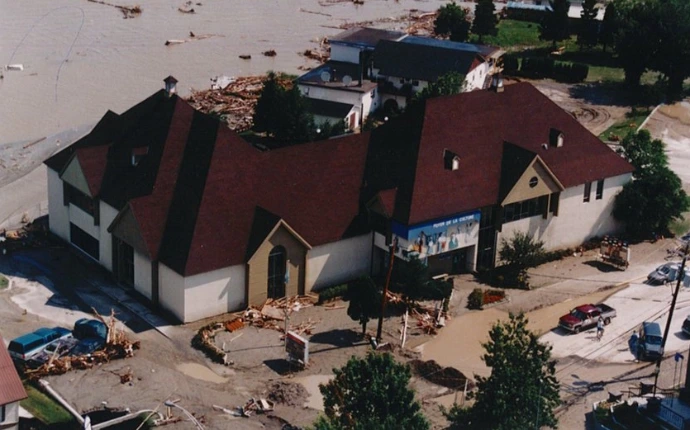
Musée du Fjord
As a result of the flooding that hit the Saguenay region, the Museum suffered substantial damage. It had to be closed for 18 months. Despite this, the Museum team continued to work toward revitalizing and rethinking the institution. There was a major project underway. The Museum’s volunteers and professionals were committed to the institution’s renewal, which was bringing together public authorities and private donors. Transformative changes have been made to the Museum.
A Natural Disaster of Exceptional Magnitude
Between July 19 and 21, 1996, 250 to 275 millimetres drenched the soil of an already saturated region, resulting in river overflows, rupture and massive opening of dams. The damage caused by these catastrophic rainfalls is now estimated at approximately 1.5 billion Canadian dollars. This is very little compared to the loss of life caused by this tragedy.
The “natural” disaster has drastically altered the territory and permanently impacted the regional landscape, embedding itself in the collective memory. Its material and immaterial traces testify to an event that brings us back to our own limits: those of knowledge, the possible and societal choices. Understanding the causes as well as the social, economic, cultural and environmental impacts of such a phenomenon remains a considerable challenge for both science and the community. Assessing risks, consequences and management practices, both before and after, is now a crucial element of our learning and future readiness.
Exibit theme
Clic on a theme to start your visit.
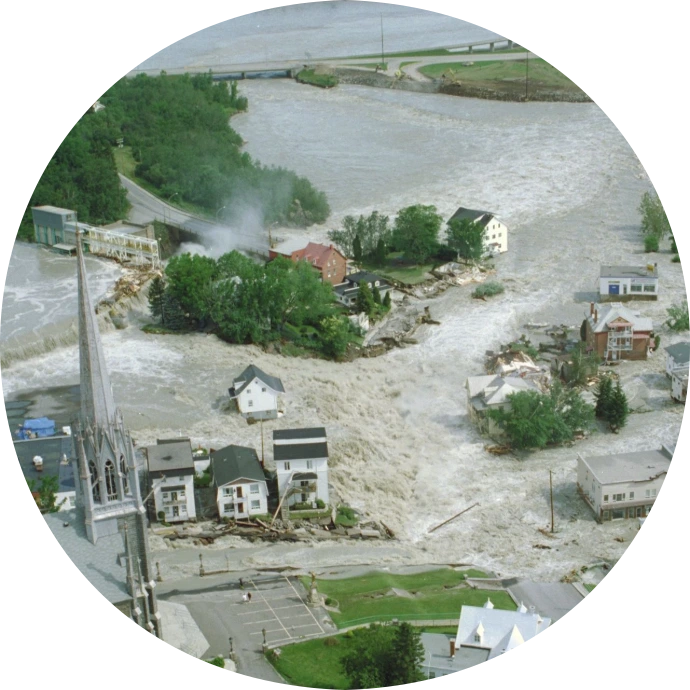
What Happened?

Impacts – Social
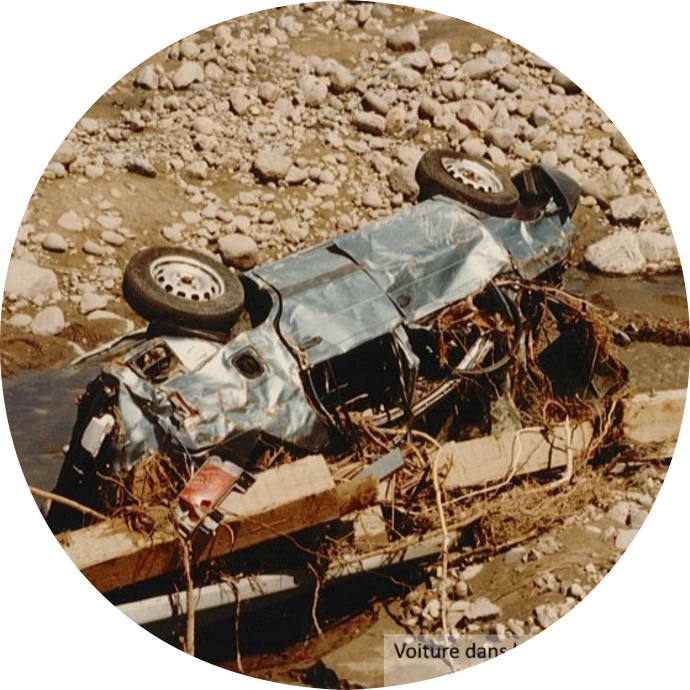
Impacts – Environmental
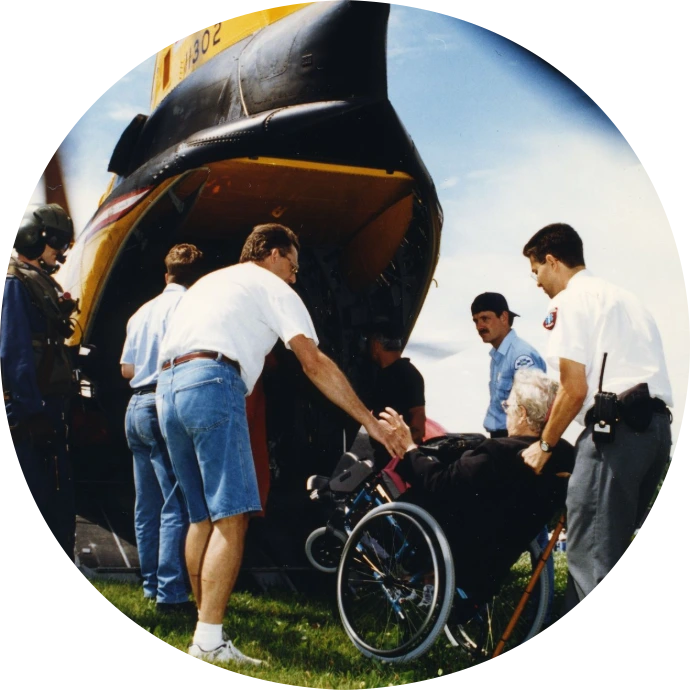
Lessons Learned
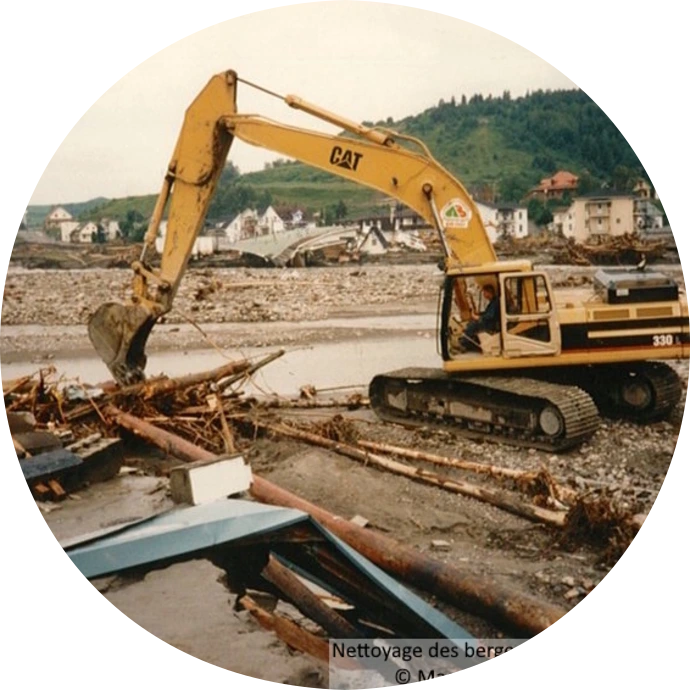
The Reconstruction
Beyond the catastrophe
The Saguenay flood isn’t merely a historical event. Decades later, some
remnants are still apparent in the landscape. The rivers, still scarred by the
disaster, remind us of the fragility of aquatic environments and the time
necessary for their recovery. Respecting the natural dynamics of waterways is
essential. The event also highlighted the vulnerability of the territory; it is
now up to us to limit future impacts and strengthen adapted climate planning.
While it left significant psychological trauma, the flood also strengthened solidarity, regional identity and the collective capacity to cope with possible extreme events. It has marked the regional population with yet another sign of resilience.
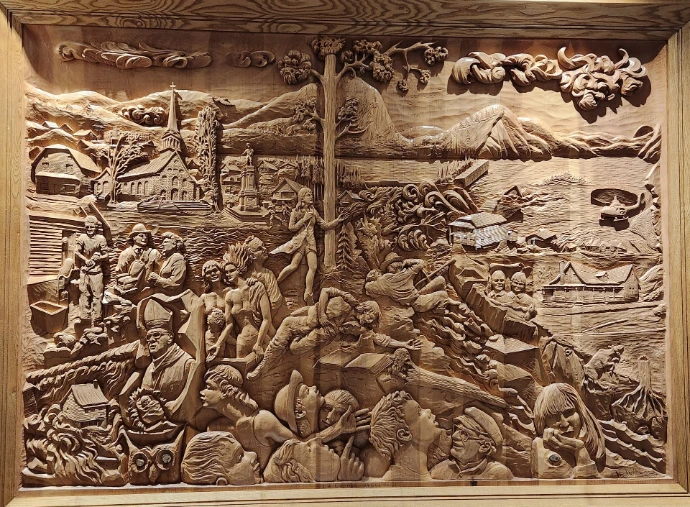
The big wave, 1996-1997
Wood sculpture, from Victor Dallaire
Musée du Fjord
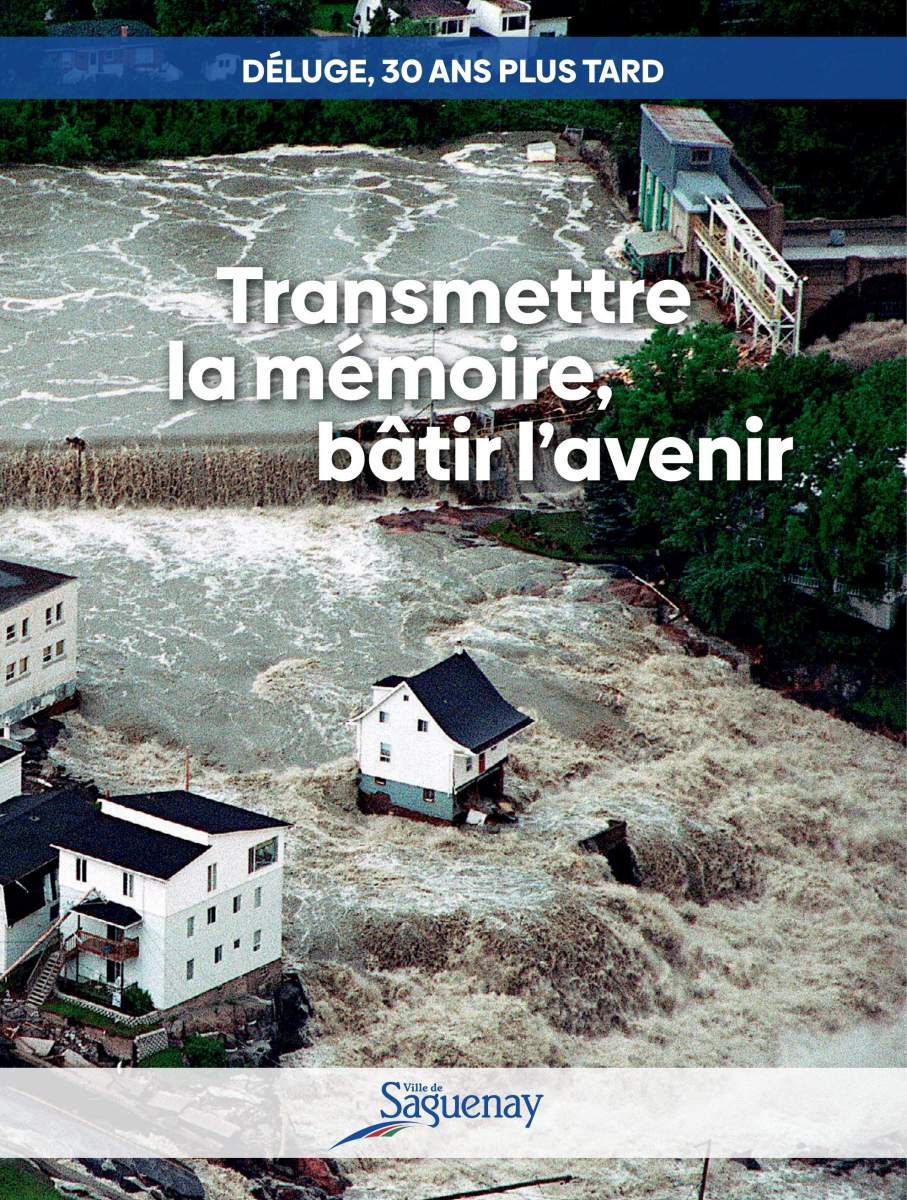
The flood, 30 years later
Magazine produit par Le Quotidien, initié et financé par la Ville de Saguenay.