Impacts - Environmental
Aquatic environments that thrive against all odds…
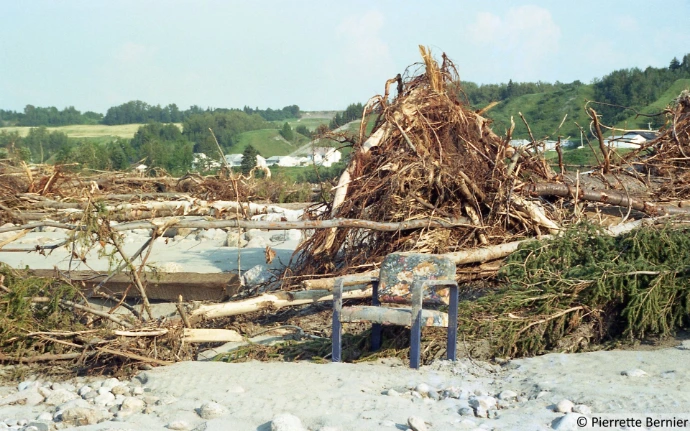
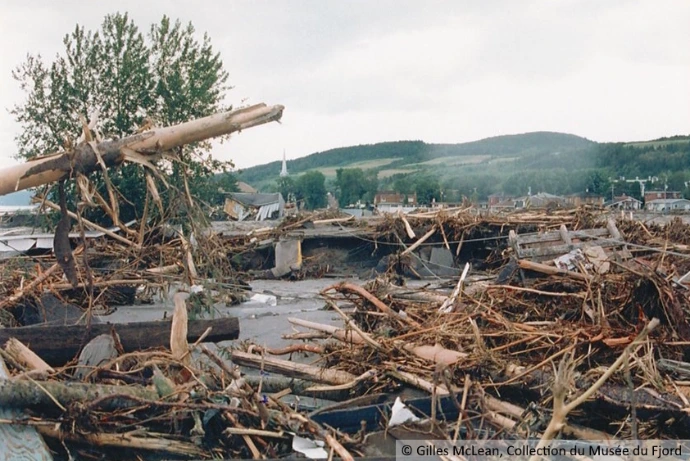
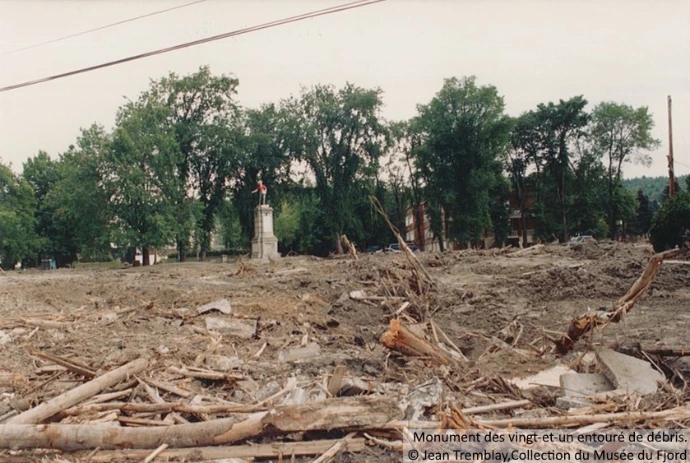
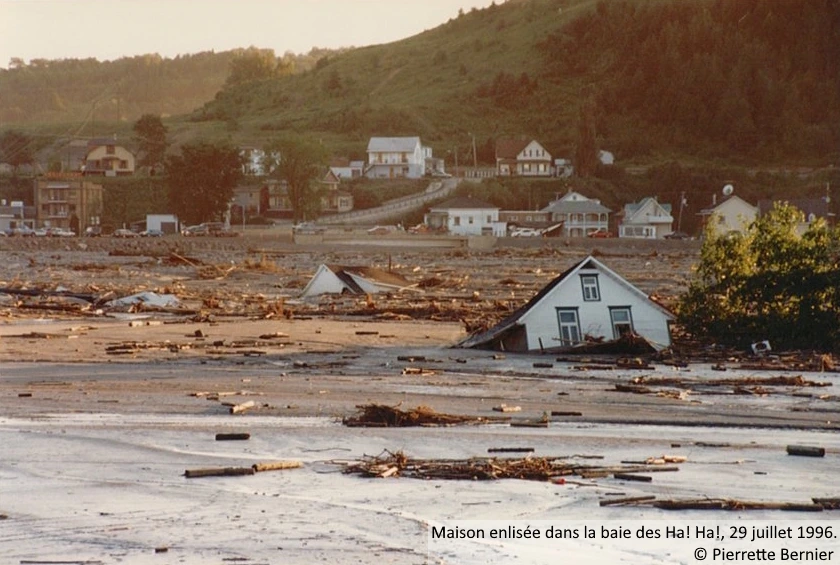
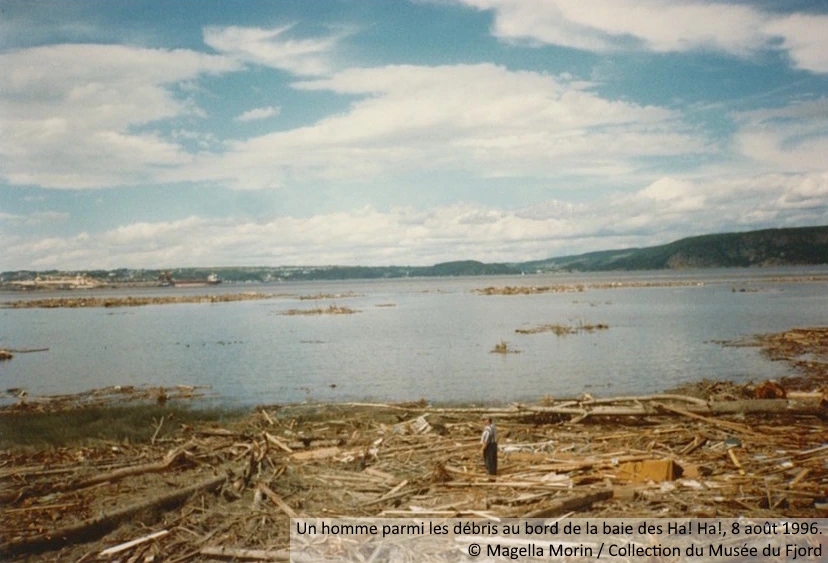
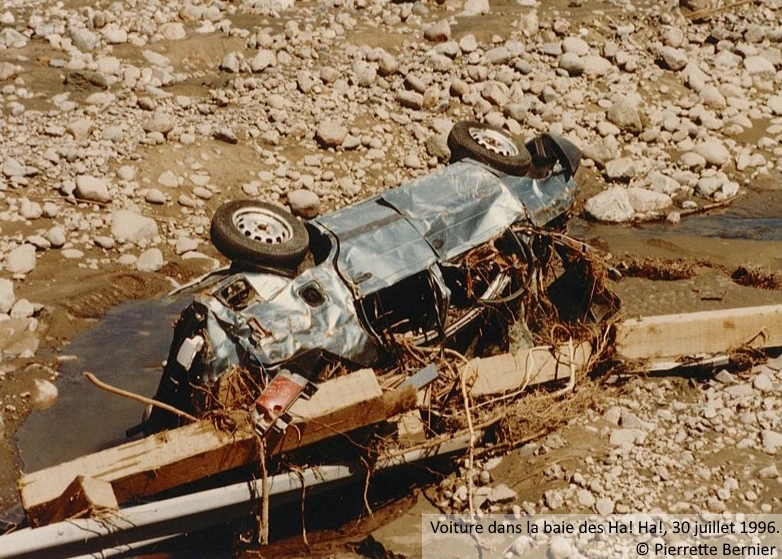
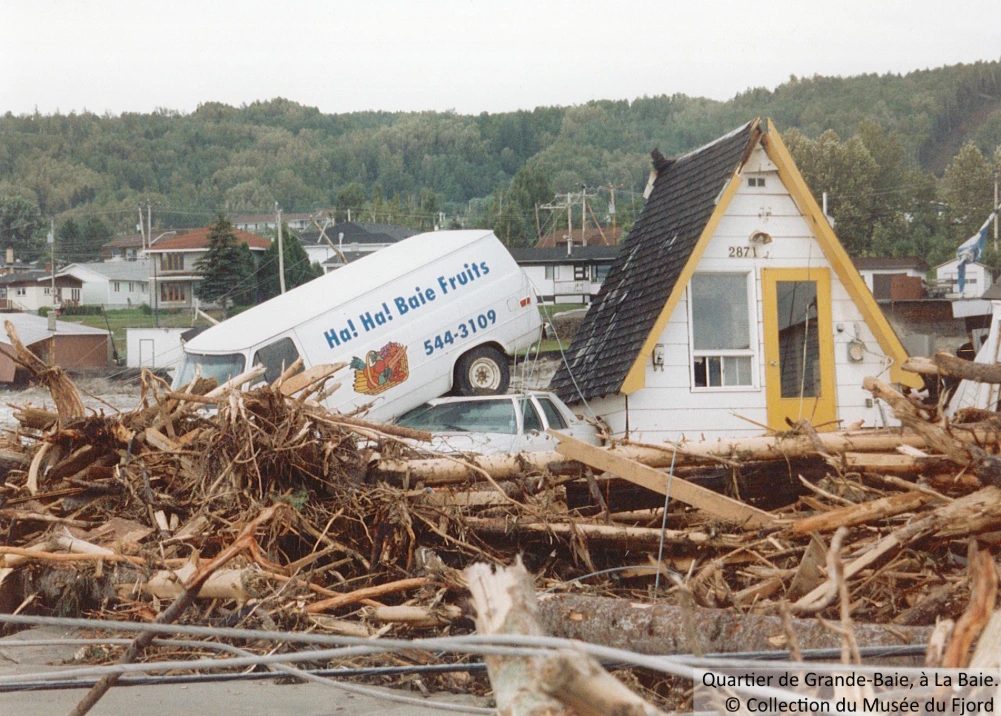
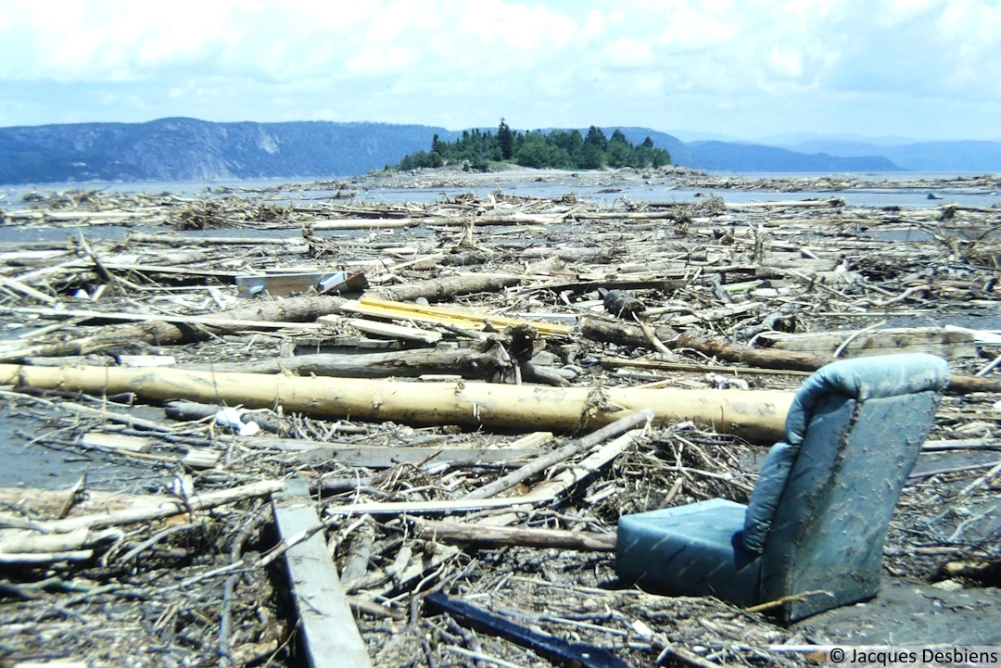
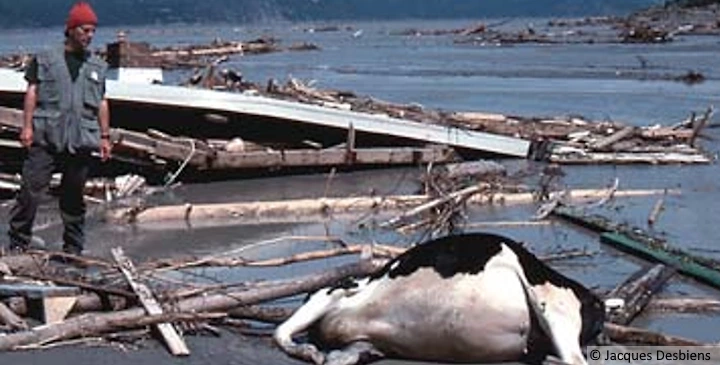
This devastating event not only caused considerable property damage, it also had a negative impact on the marine environment and freshwater habitats. But the environmental impact could have been much worse…
Diluted pollution = problems avoided
During the floods, the waters carried countless debris of all kinds, as well as chemicals, some of which were likely toxic. But the water flows were so high that these pollutants were completely diluted in the environment. Two months after the floods, oceanographers tested the Saguenay River and found no trace of pollutants.
This
sculpture, which had been swept away by the 1996 flood, was found by Renée
Déraspe in Fatima, Îles-de-la-Madeleine. Fortunately, an inscription on the
back identified Vincent Mercure as the sculptor and La Baie as the place of
origin. And so, after travelling the fjord waters and the river, the La Baie
sculpture was able to return home in November of that same year. The sculptor’s
family felt it was important to donate the work to the Musée du Fjord so
that their father’s legacy and the history of this extraordinary journey
would last for a long time.
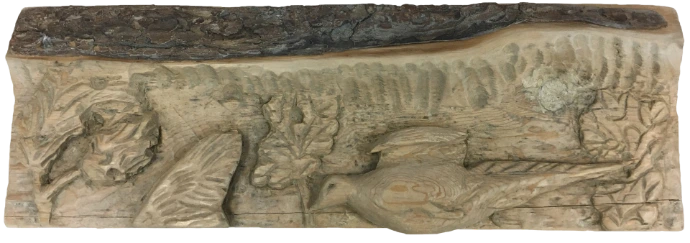
Wood carving
Vincent Mercure
(1923-1982)
1979
Donated by Lyne
Mercure
Musée du Fjord Collection
Rivers cleaned up by the floods
The floods of July 1996 had beneficial effects on many waterways. Some rivers even needed to be purged.
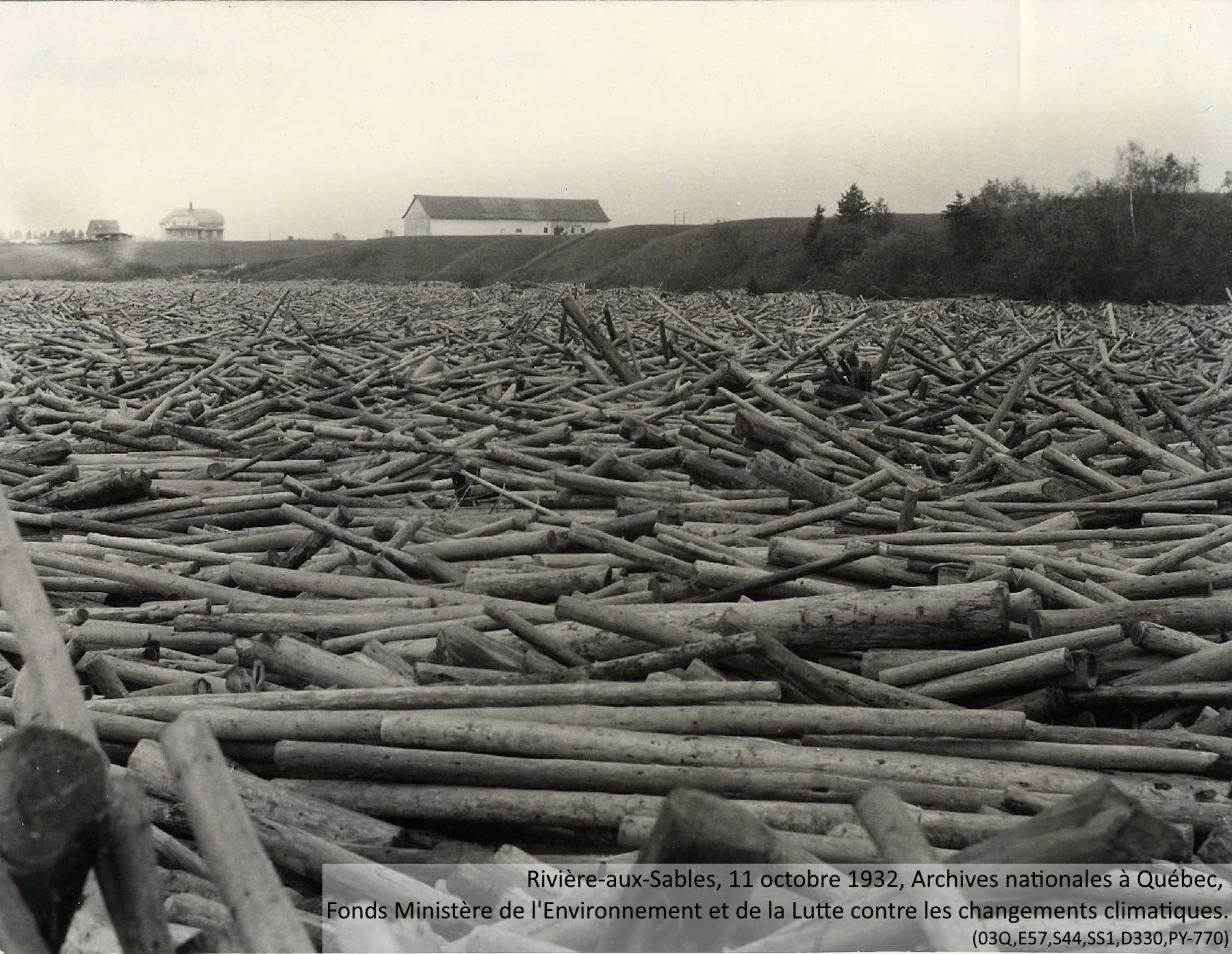
For more than a century, most of the rivers in Saguenay–Lac-Saint-Jean were used for log driving, the “drave”. Aux Sables River, in Jonquière, was one of them. Throughout these years, vast quantities of timber and bark have gathered at the riverbed, which caused pollution. During the floods, the flow of the Aux Sables River was fifteen times higher than normal. Thanks to the power of the water, the riverbed of the Aux Sables River was completely cleared, and the wood that had been scattered across the riverbed suddenly ended up on the banks. Consequently, over 5,000 cords of wood have been retrieved, not including the 5,000 truck journeys packed with bark.
New sediments … which bury the old pollutants
Approximately
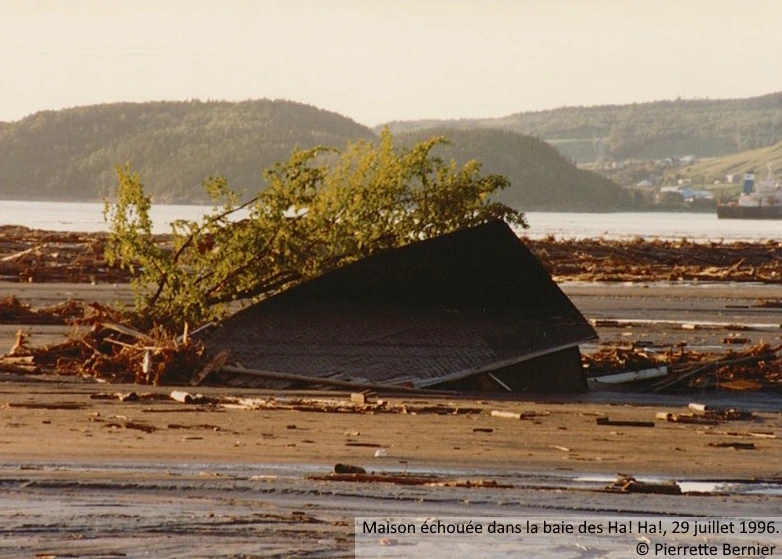
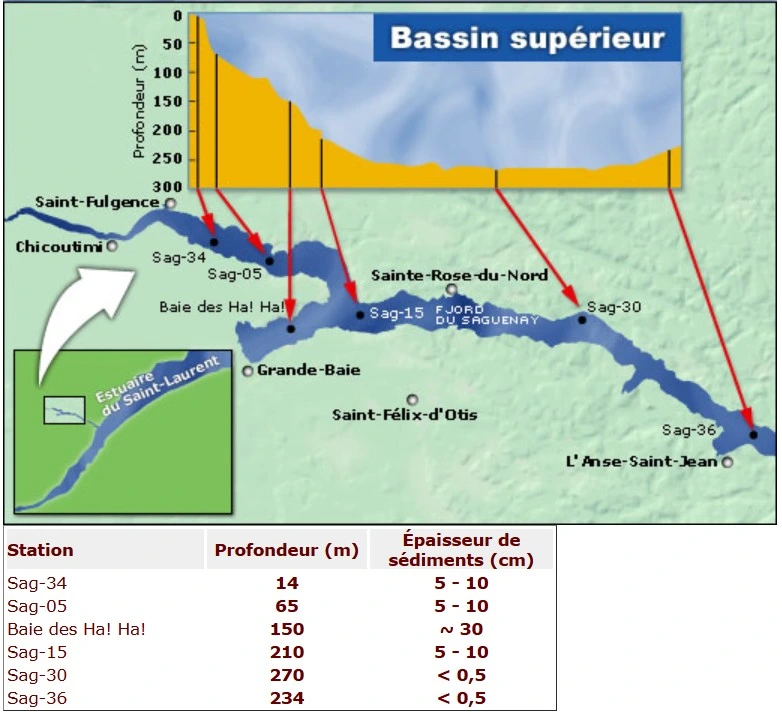
three millimetres of sediment is deposited annually on the bottom of the Baie
des Ha! Ha!. In just a few days in July 1996, 10 to 40 centimetres, 10 to
40 centimetres of sediment were deposited, depending on the areas,
which is
equivalent to 75 to 150 years of sedimentation! In total, more than 9,000,000
tonnes of sediment
was transported during the floods. That
represents a hundred years of sedimentation in a few days!
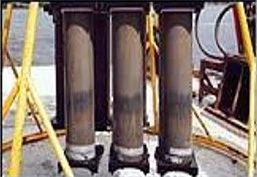
The positive effect of these sediments is that they have been deposited on other old, contaminated sediments accumulated over the decades 50, 60 and 70 because of aluminum smelters and paper mills. A few years later, in 2002, studies concluded that the new sediment layer is stable and still acts as a physical and geochemical barrier.
Buried invertebrates resettle
The tons of sediment deposited at the bottom of the Baie des Ha! Ha! and the Saguenay River quickly buried the benthos, a group of organisms living on the seabed and serving as food for certain species of fish. Fortunately, burial has been short-lived as benthos have good recolonization capacity. The organisms that compose it therefore quickly rose to the surface of the sediments.
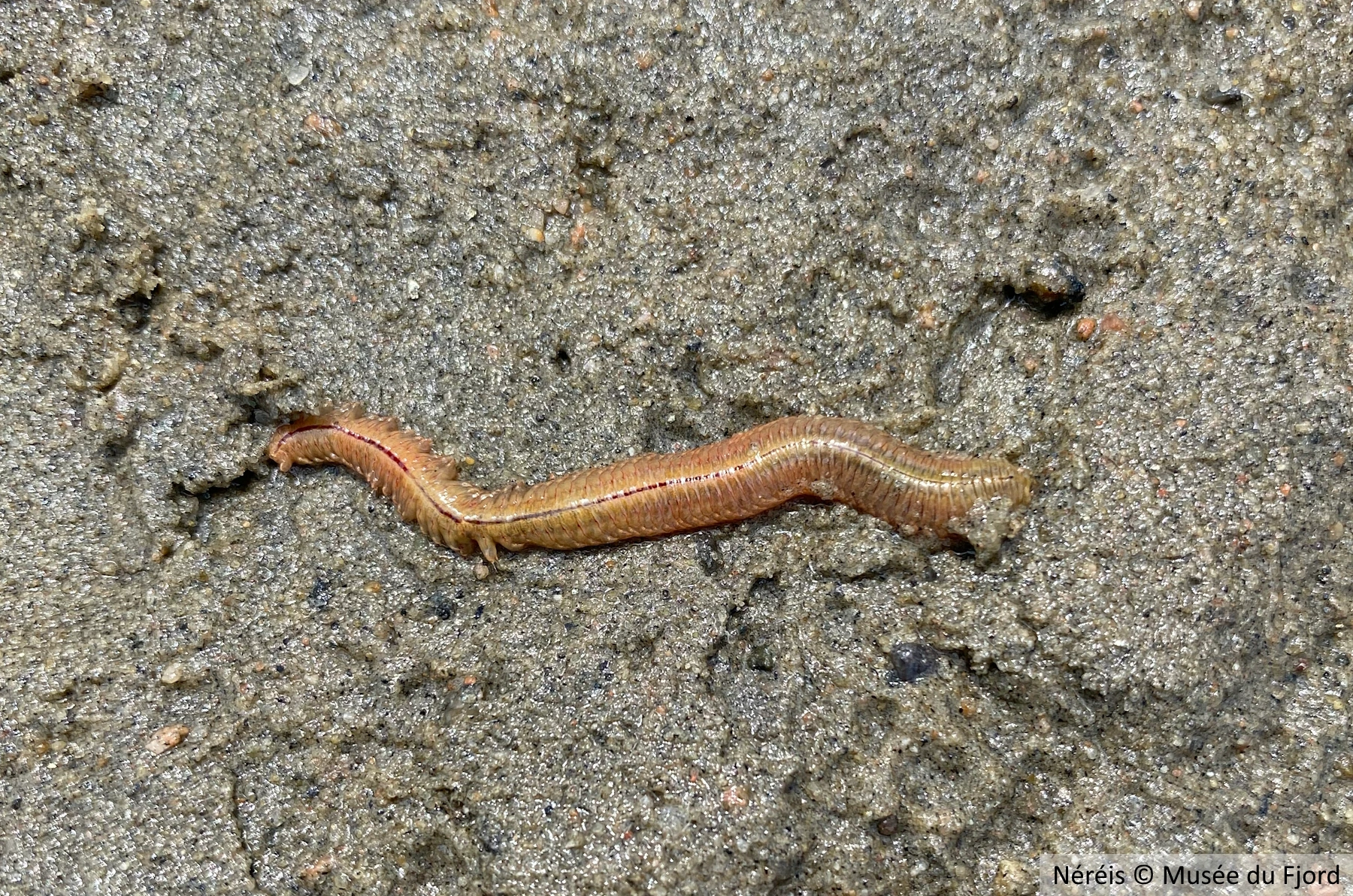
Studies conducted over several years have demonstrated the recolonization of sediments by polychaete annelids.
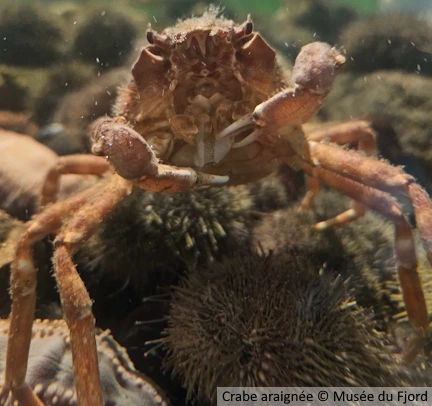
As for other species living on the seabed, such as the snow crab and the northern shrimp, they have avoided burial due to their high mobility.
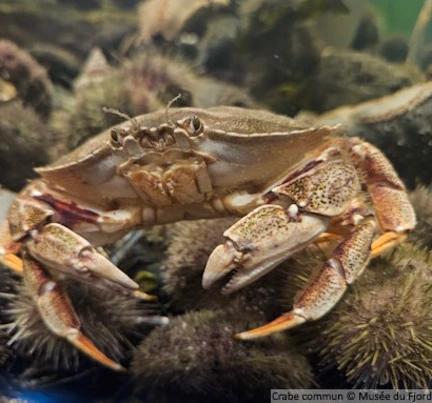
Fish on the front line
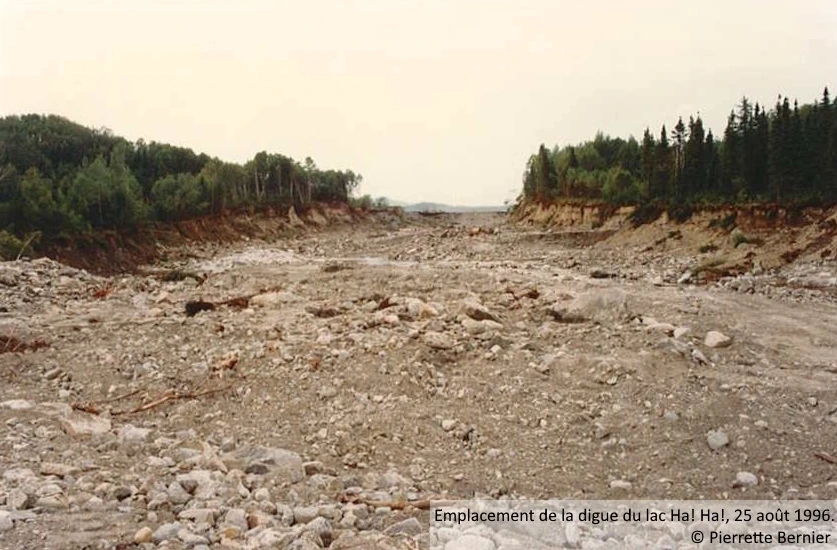
The exceptional flooding of the Rivière à Mars has severely affected the populations of young fish. Strong currents washed away many smolts, while sediments buried insect larvae, reducing an important food source. They also covered the spawning grounds with sand, compromising the development of the eggs. Today, the river has regained its pools thanks to various restoration projects. The floods destroyed the fish pass, but it has since been rebuilt. Shoreline erosion has resulted in the loss of vegetation critical to fish habitat. The rupture of a dike in the Ha! Ha! reservoir has almost completely emptied the lakes, causing a sharp decline in several species and their food resources.
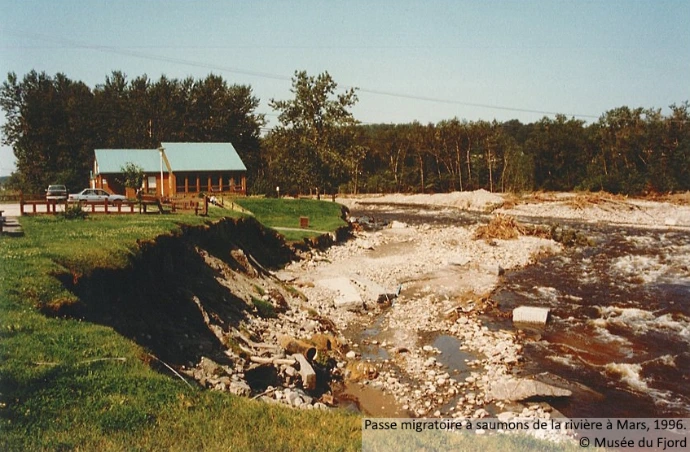
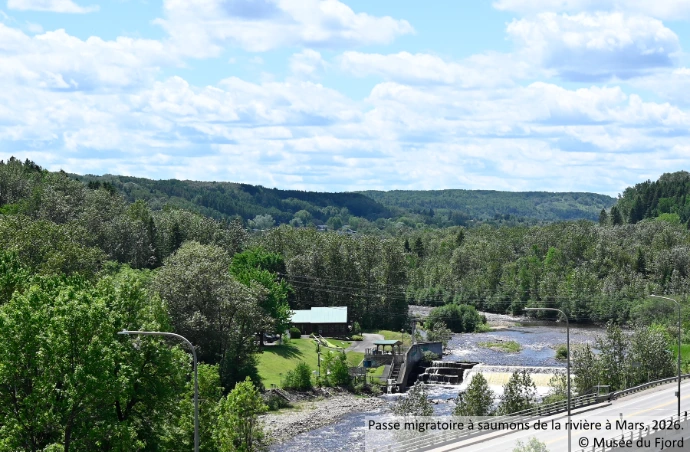
The floods also destroyed the salmon migration pass. It was rebuilt at a cost of $1,390,000.
The high flows of the rivers have led to the erosion of the banks, meaning the loss of trees and shrubs along the riverbanks. This vegetation is part of the fish habitat, as it provides shelter, shade, and food.
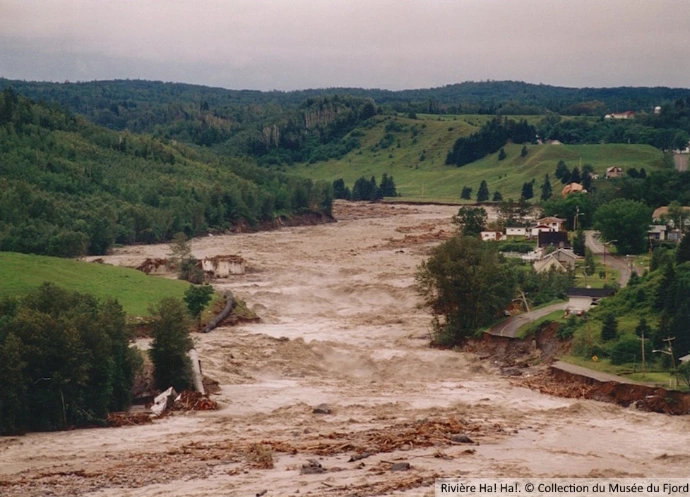
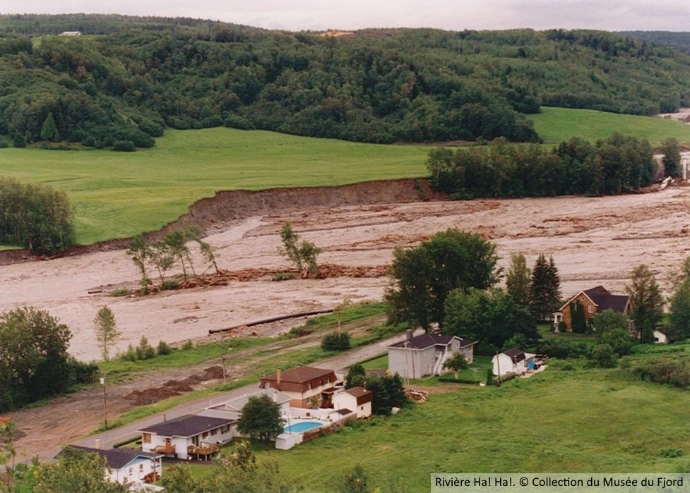
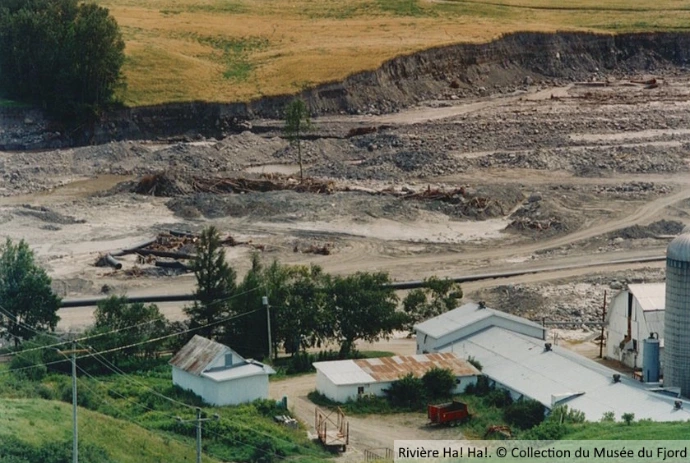
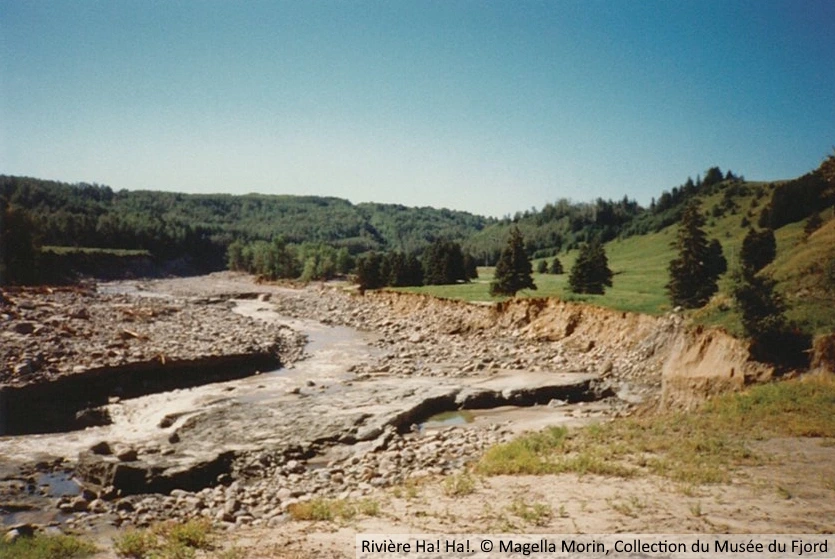
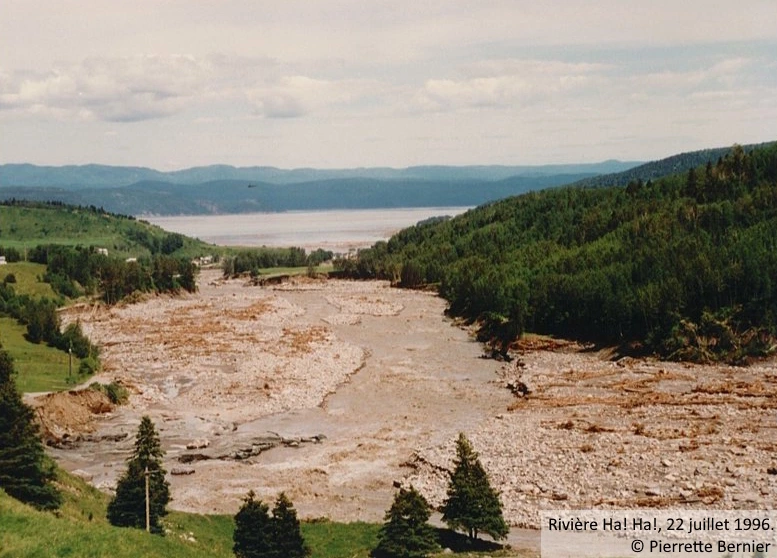
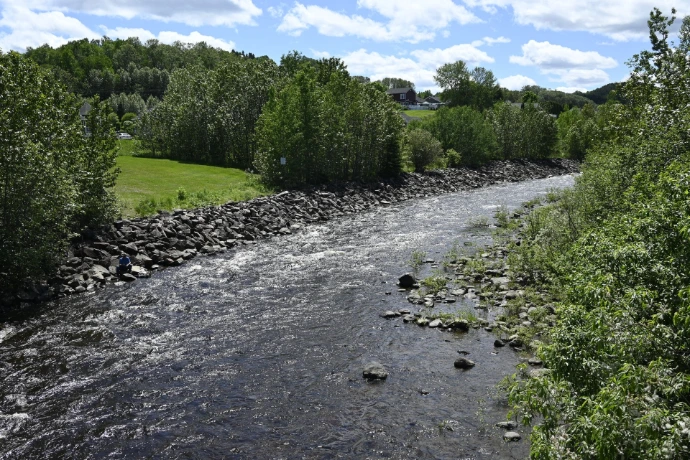
Under the force of the waters, a dike located on the Ha! Ha! reservoir gave way completely. All the water from the lake flowed down to the Saguenay River via the Ha! Ha! River. This is 15,000,000 cubic metres of water from the 23,000,000 cubic metres of Ha! Ha! reservoir which flowed into the river. Result: the great and small Ha! Ha! lakes have almost completely emptied.
← Previous theme Return to homepage Next theme →
3346 Boul. Grande-Baie Sud, G7B 1G2 | Ville de Saguenay | Québec, Canada