The Reconstruction
Considerable Financial Costs
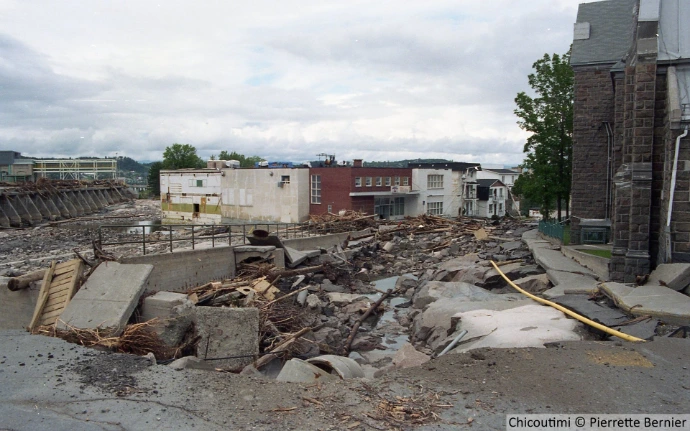
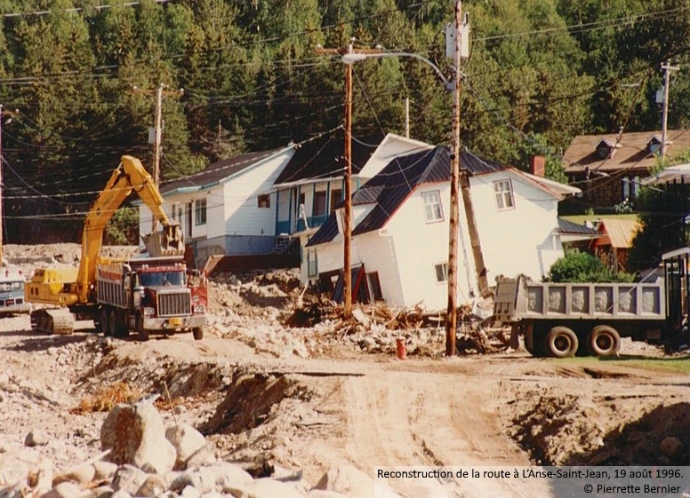
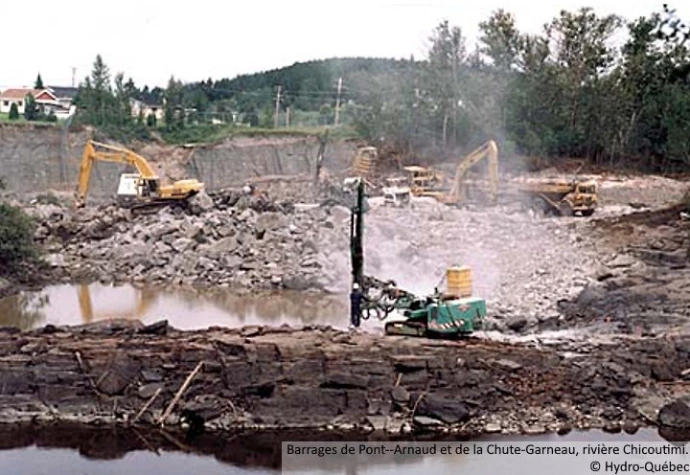
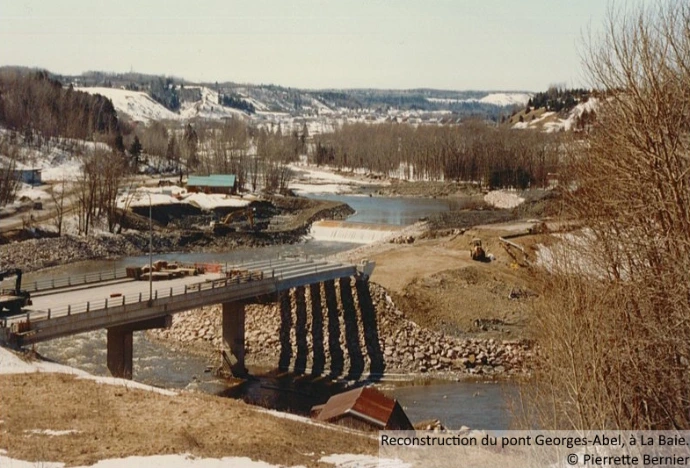
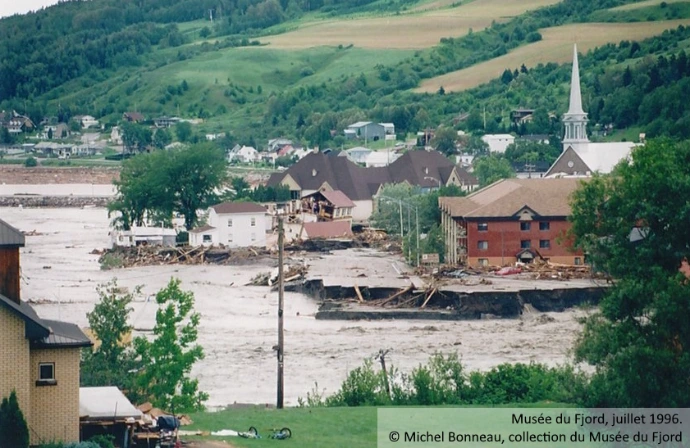
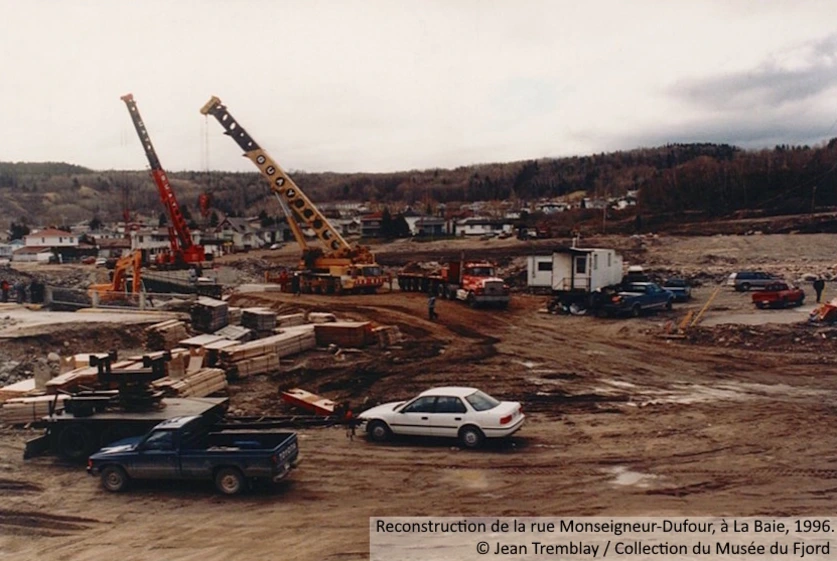
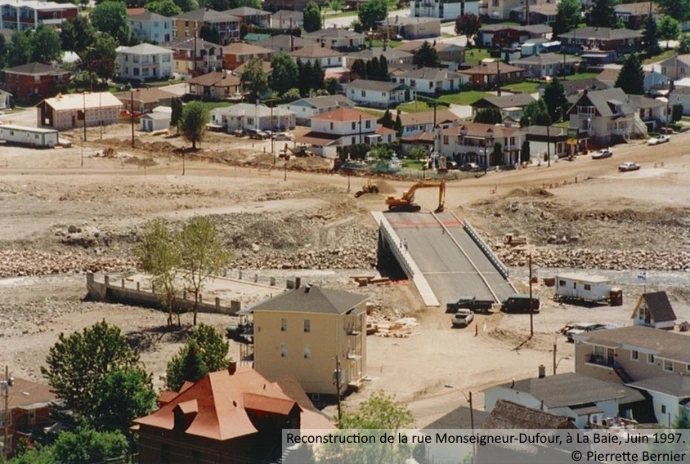
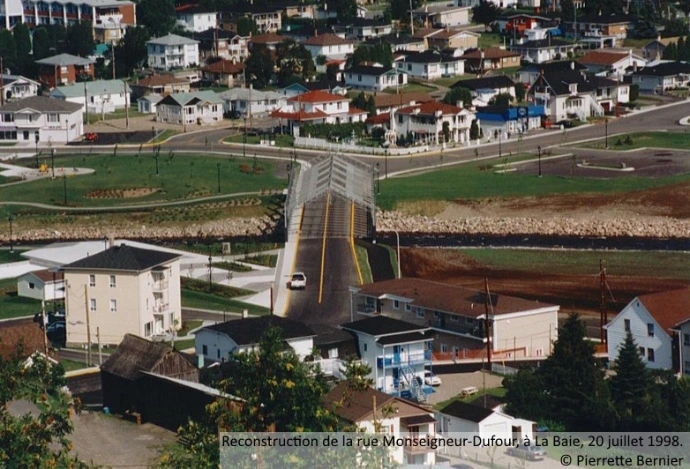
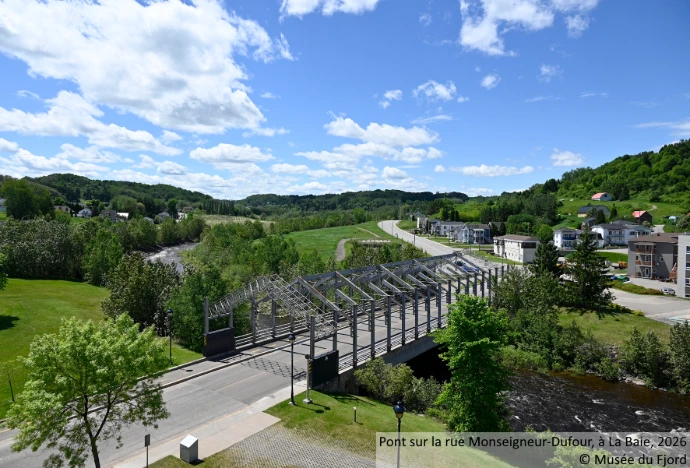
In addition to the psychological trauma they caused, the 1996 floods represented considerable financial costs. Total material losses were estimated at approximately $1.5 billion. In addition to buildings, infrastructure was particularly affected: roads, railways and bridges were washed away. Numerous projects have been launched to restore everything to its original condition. This massive reconstruction mobilized workers, businesses, and municipalities to rebuild a deeply marked region.
In the 13 years following the flood, nearly $30 million was redistributed by the Red Cross to, among other things, help victims reintegrate or rebuild their homes, support community infrastructure projects, and encourage the population's resilience in the face of disasters.
Since the fund's closure, the balance has been redistributed during large-scale claims in Quebec. As of July 2016, the fund balance was $559,288, an amount available for other major disasters.
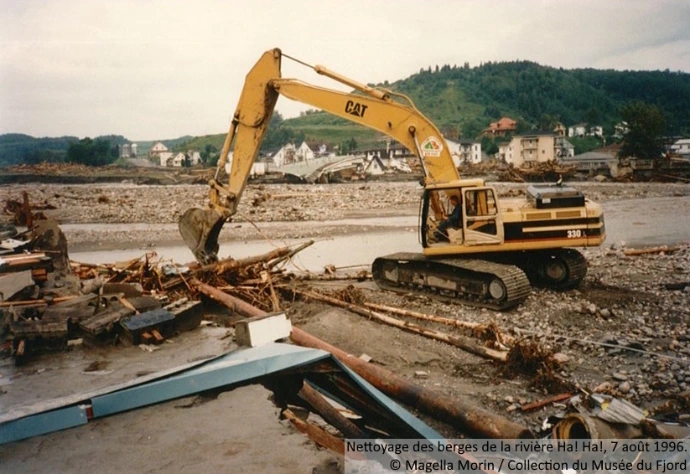
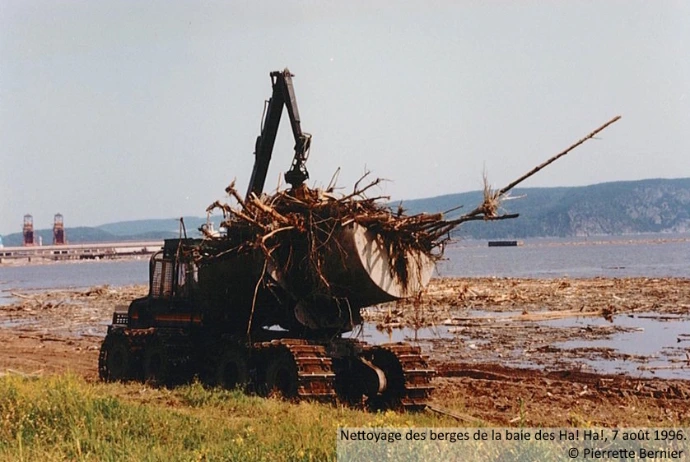
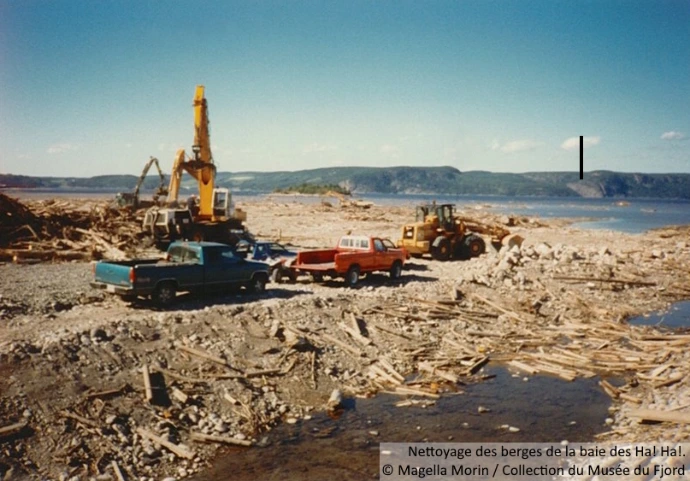
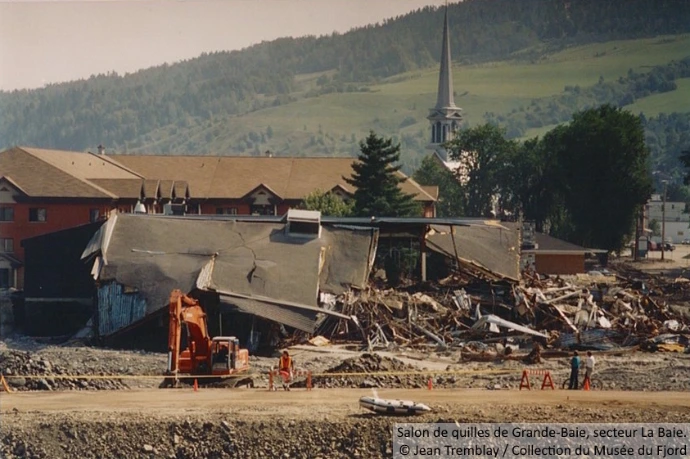
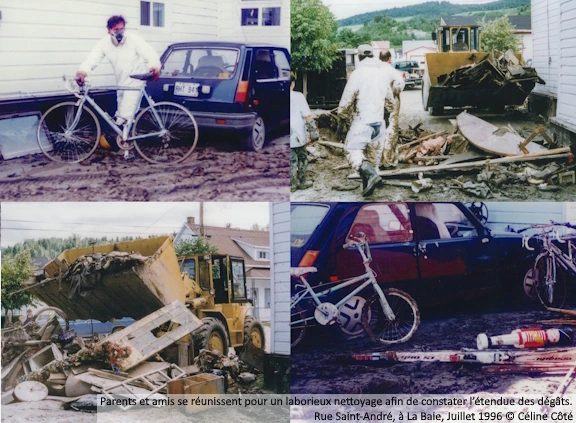
57 municipalities were affected, of which 27 with damages exceeding $100,000 each.
In Chicoutimi, more
than 100 construction projects were launched between August and November
1996, representing $60 million in
construction work.
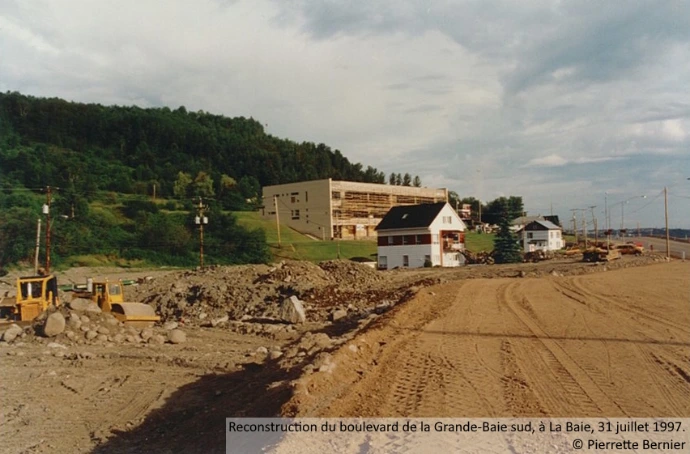
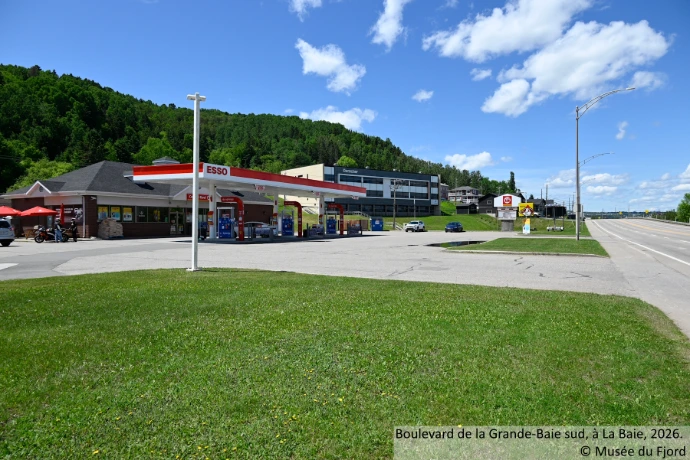
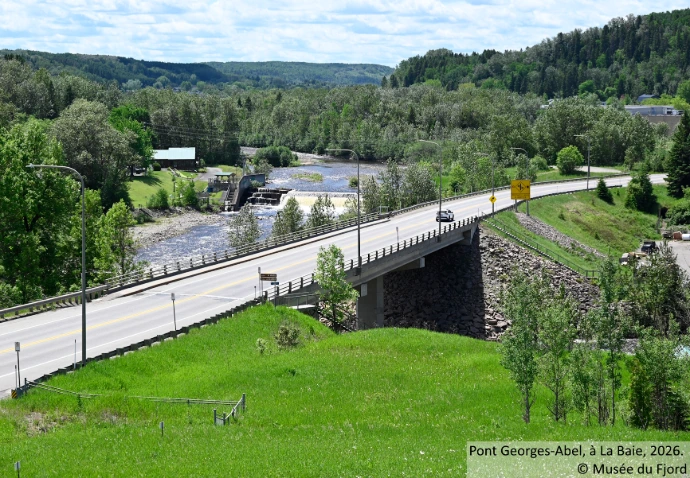
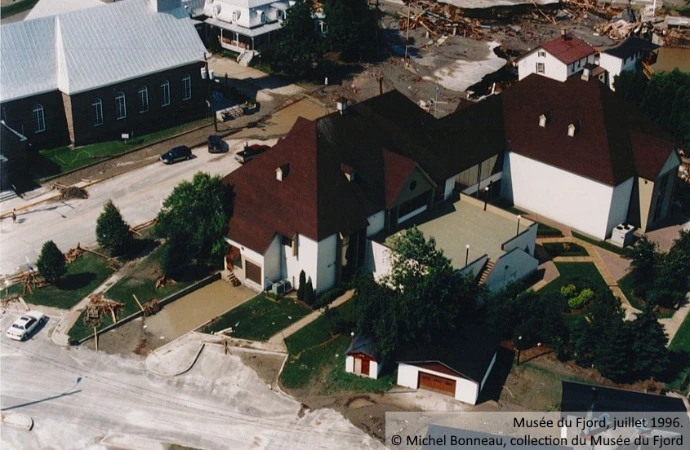
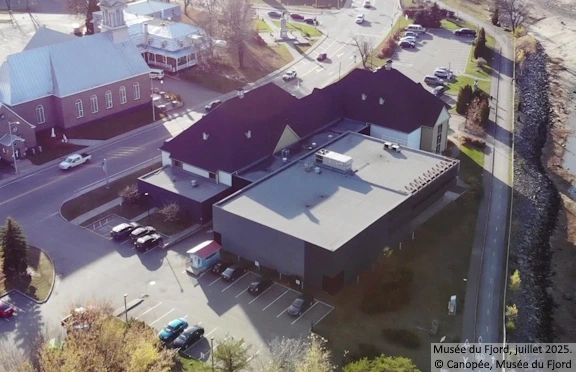
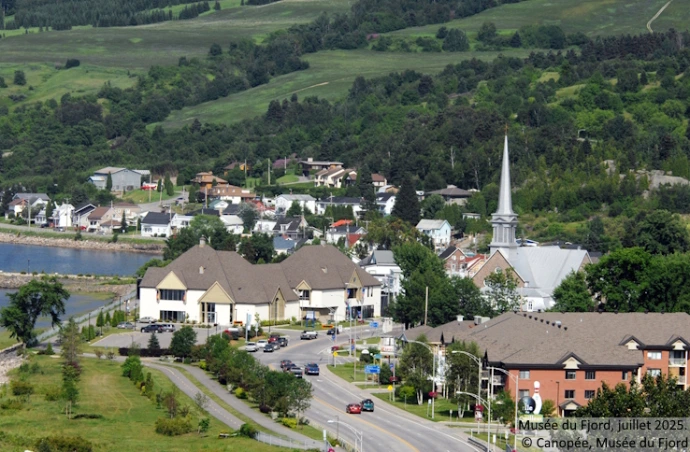
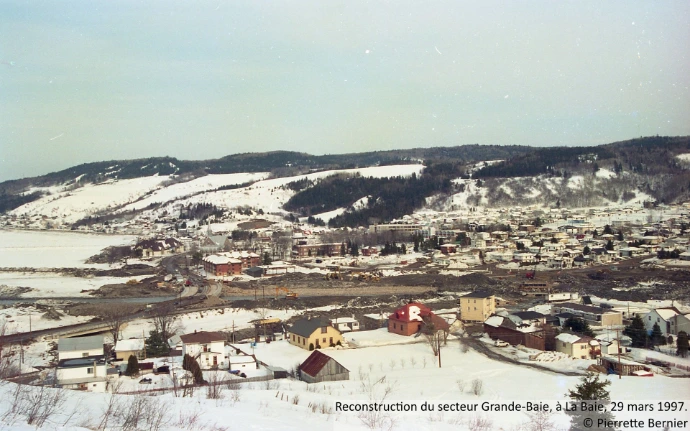
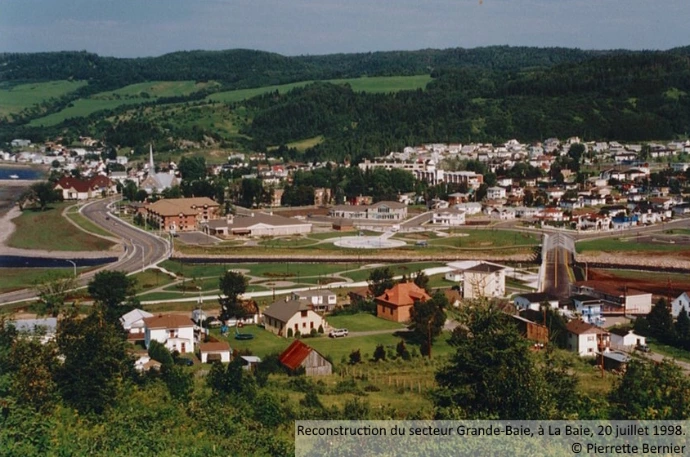
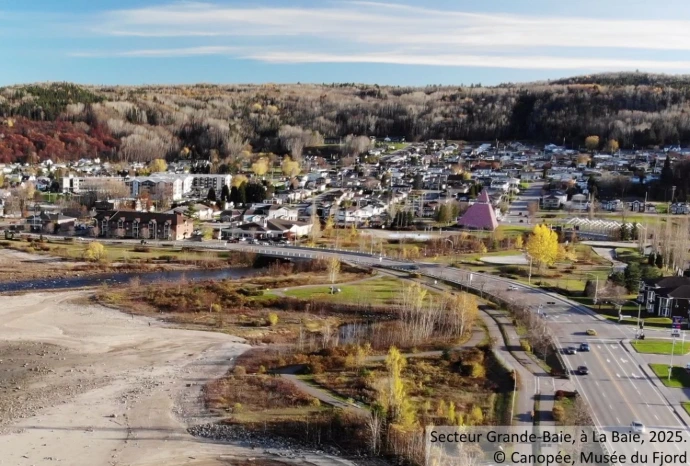
In La Baie, the reconstruction work was impressive,
spanning a period of approximately three years. More
than 600 people lost everything…
More
than 2,000 citizens have seen their homes heavily damaged.
238
houses disappeared, 850 homes destroyed, 20 businesses swept away and 25 others
damaged, including 4 major businesses.
Source : ville.saguenay.ca
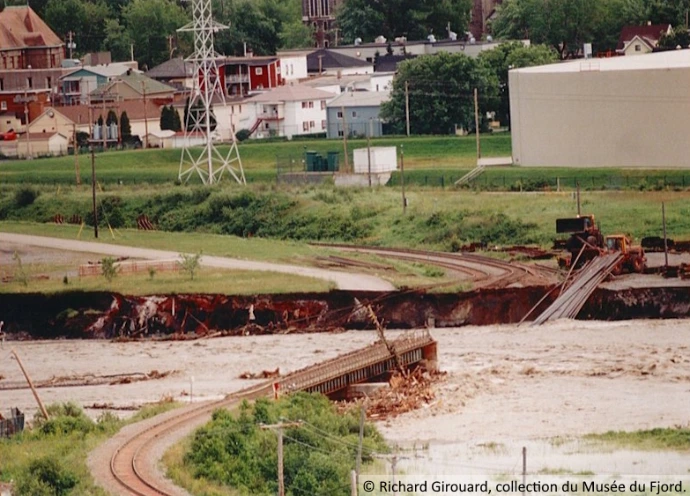
The Roberval–Saguenay railway required $20 million for its reconstruction, which was completed in four months.
LA BAIE
1996 - 2026
Psychological After-Effects Still Persist
The flood of 1996 not only reshaped rivers: it left deep and lasting scars on the population. Scientific research, testimonies, and commemorations show that social impacts are and will always be felt in individual and collective memory, mental health, residential mobility, social cohesion, and regional culture.
Some people have had to go through a long process of healing to make sense of the loss of a loved one. For others, the flood marked the first day of a new life—one that begins anew after a hard blow. They lost their homes, memories, businesses, jobs and savings. They started all over again.
“Anyone who has not experienced firsthand this ordeal of unprecedented magnitude cannot truly measure the impact it will have had on the victim, on the individual.”
Source: Roger Nicolet, Preface to Une région dans la turbulence, Presses de l’Université du Québec, 1998.

He was only five years old when his brother and sister died, buried
under a mudslide on the morning of July 20, 1996, in La Baie. Nearly thirty
years later, Jason Paquet-Garceau wrote a book about this tragedy that marked
his family forever.


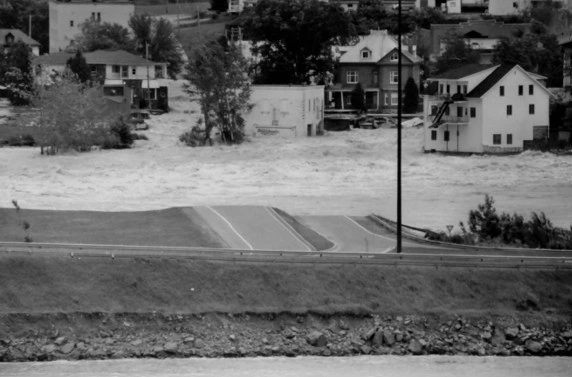
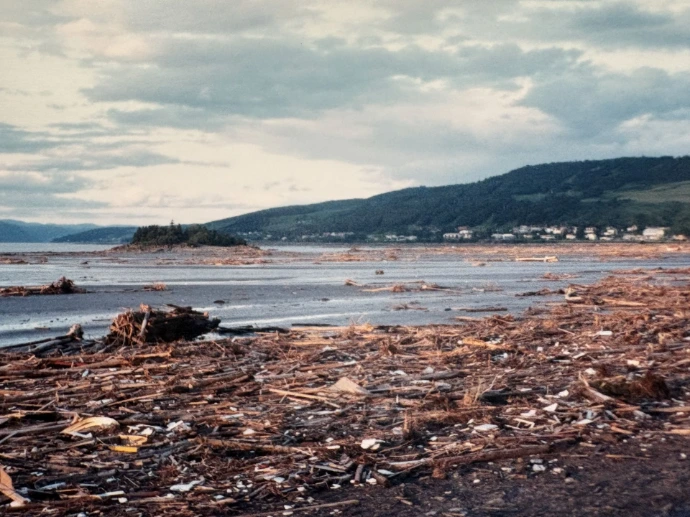
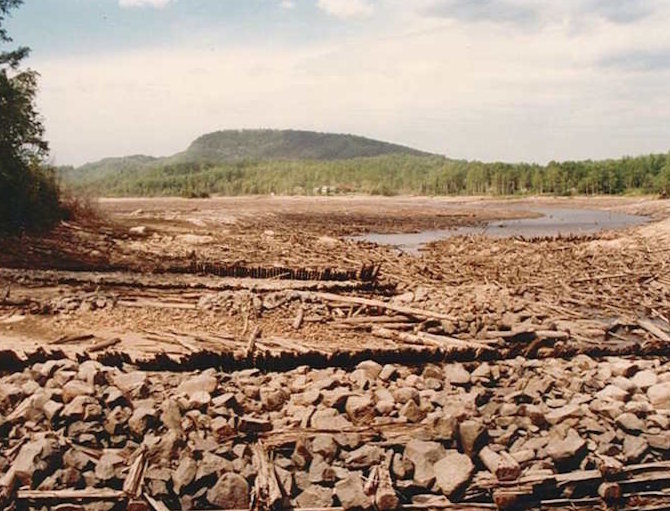
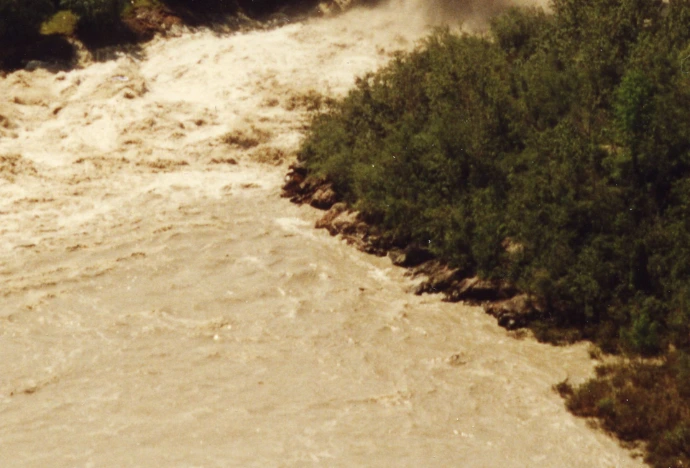
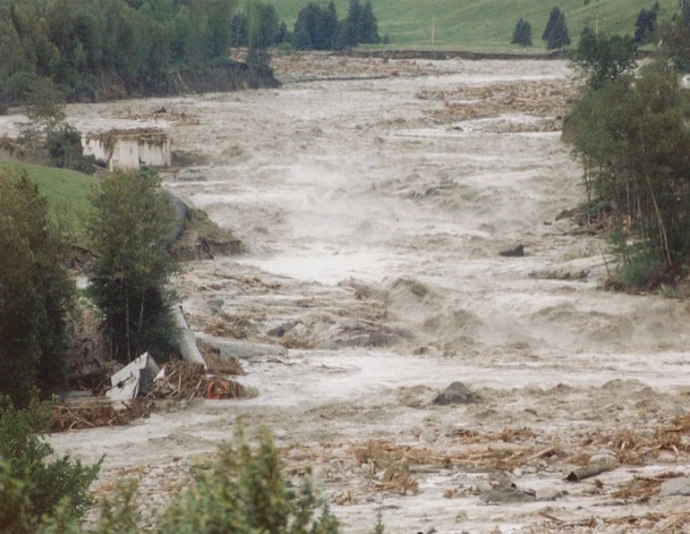

what remains of the flood
Production of La boîte de pickup, 2016
(11:09 minutes)
← Previous theme Return to the homepage Next theme →
3346 Boul. Grande-Baie Sud, G7B 1G2 | Ville de Saguenay | Québec, Canada